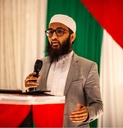
A few days ago, Shaykh Hisham Abu Yusuf visited the LINCS Hub.
During one of his reminders, he shared a story that genuinely caught my attention. He mentioned that when he was around seven years old, he had the opportunity to ask Dr. Zakir Naik a question:
"Is it permissible to watch cartoons?"
Curious, I searched for the clip and watched it today.
Like many people, I grew up hearing about Dr. Zakir Naik. I also knew he was, and still is, one of the most controversial figures in contemporary Islamic da'wah. As a student, before I ever stepped into the realities of community work, most of what I heard about him revolved around criticism. We were told he wasn't someone to follow, that he had mistakes, that he approached issues differently, and that many scholars had serious reservations regarding aspects of his methodology.
Those discussions are real, and they have their place.
But watching that video today, I found myself thinking about something completely different.
One sentence.
"Islam should not create a vacuum."
Strangely, although I'd heard this phrase before, I never truly understood it.
I graduated from my Islamic studies around five years ago. My years as a student were spent in an environment devoted to sacred knowledge. It was a blessing, but like every institute, it was also its own world.
Life outside those walls was different.
It wasn't until I left that environment and immersed myself in community work that I began to understand what people actually meant by a "vacuum."
Working with young people changes you.
Working with families changes you.
Meeting new Muslims changes you.
Speaking to brothers who are trying to leave addiction, loneliness or disbelief changes you.
You realise that people don't simply stop doing something because you tell them it's wrong.
Human beings are created to seek something.
If they leave one gathering, they'll look for another.
If they abandon one habit, they'll search for another.
If they walk away from one identity, they'll long to belong somewhere else.
If we remove something without replacing it with something better, we shouldn't be surprised when something else fills that empty space.
That, I realised, is the vacuum.
The Prophet ﷺ understood this better than anyone.
His methodology was never simply to forbid.
He replaced.
He removed shirk and established tawḥīd.
He removed tribalism and established brotherhood.
He removed immoral gatherings and established gatherings of remembrance.
He removed despair and filled hearts with hope.
He never left people with an empty life.
He always gave them something greater.
That is why the Prophetic methodology is so remarkable.
It is deeply connected to reality.
It understands people before trying to reform them.
It acknowledges human nature rather than pretending it doesn't exist.
The Sunnah isn't detached from life, it speaks directly to it.
Watching that video this morning planted that thought in my mind.
Then, later that evening at Brotherhood, I had a conversation that stopped me in my tracks.
Someone casually mentioned:
"I accepted Islam through Dr. Zakir Naik's videos."
SubḥānAllah.
I don't know why, but that sentence hit me differently.
As students, it's easy to become consumed by discussions about personalities, methodologies and criticisms. Those discussions matter, and scholarship must always remain principled.
But standing in front of a real human being who is a Muslim today because Allah guided him through those videos... that's different.
That isn't an academic discussion.
That's someone's entire life.
Someone who says lā ilāha illā Allāh.
Someone who prays.
Someone who hopes for Jannah.
Someone whose future generations may all be Muslim because Allah opened one heart through a means none of us would have expected.
That makes you pause.
It reminds you that guidance belongs entirely to Allah.
He guides whom He wills, through whom He wills.
Perhaps the greatest lesson I took away wasn't about cartoons at all.
It was about understanding reality.
The more involved I become in community work, the more convinced I am that our challenge today isn't simply telling people what to avoid.
Our challenge is building what they can run towards.
A masjid that feels like home.
A brotherhood that replaces loneliness.
A youth project that competes with the streets.
A place where questions are welcomed before Google answers them.
A community where people find purpose before the world offers them a counterfeit version.
Maybe that is what "not creating a vacuum" really means.
And maybe that's why the Prophetic methodology remains timeless.
Because revelation never ignored reality.
It transformed it.
The Messenger ﷺ didn't simply remove darkness.
He replaced it with light.
And perhaps that's exactly what our communities are being called to do today.